Togo
Togo is a country in Africa. Explore its flag and capital below — then test yourself.
- Continent
- Africa
- Capital
- Lomé
🧭 
Take the Togo quiz 10 questions: capital, neighbours, currency, history & more →
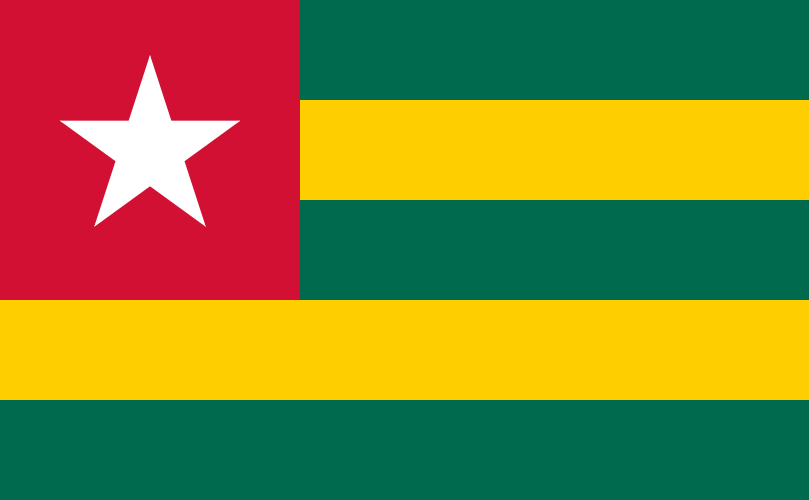
Flag of Togo See the flag, its meaning & look-alikes →
🏙 Capital: Lomé Play the capital quiz →
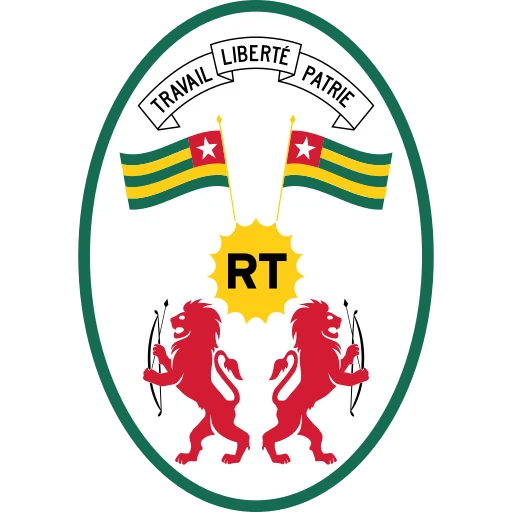
National emblem Play the coat-of-arms quiz →
Togo's flag has five horizontal bands of green and yellow with a white five-pointed star on a red square in the upper hoist. The five stripes represent the country's regions, green stands for agriculture and hope, yellow for mineral wealth and labour, red for the blood of independence, and the white star for purity and the nation's life. It was adopted in 1960.
Facts about Togo
- The capital of Togo is Lomé.
- Togo shares a land border with Benin, Burkina Faso and Ghana.
- Togo uses the West African CFA franc (XOF).
- Togo has about 8.6 million people (2025).
- Togo covers 56,785 km².
- Togo became independent from France on 27 April 1960.
- Togo's biggest export is gold. Top exports: gold, refined petroleum, soybeans, phosphates and cashews and coconuts.
- Official language of Togo: French.
- Largest religious group in Togo: Christian (42.3% of people).
- In Togo, people drive on the right.
- Togo has 56 km of coastline.
- Togo's system of government: presidential republic.
- Togoland was a German protectorate from 1884. After World War I it was split between Britain and France, and the French part became Togo.
- Gnassingbé Eyadéma was Africa's longest-serving ruler when he died. His son Faure Gnassingbé has ruled since.
Sources: World Bank, CIA World Factbook, Wikidata (details).
Is Togo bigger than its neighbours? Compare its population and size in Country Clash →
Play the flag quiz → Play the capital quiz →