Cyprus
Cyprus is a country in Europe. Explore its flag and capital below — then test yourself.
- Continent
- Europe
- Capital
- Nicosia
🧭 
Take the Cyprus quiz 10 questions: capital, neighbours, currency, history & more →
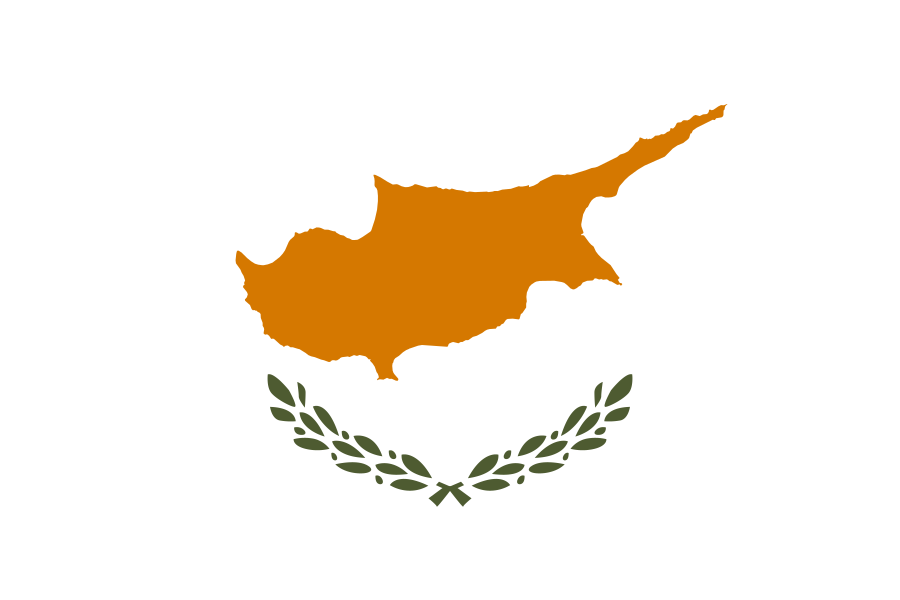
Flag of Cyprus See the flag, its meaning & look-alikes →
🏙 Capital: Nicosia Play the capital quiz →
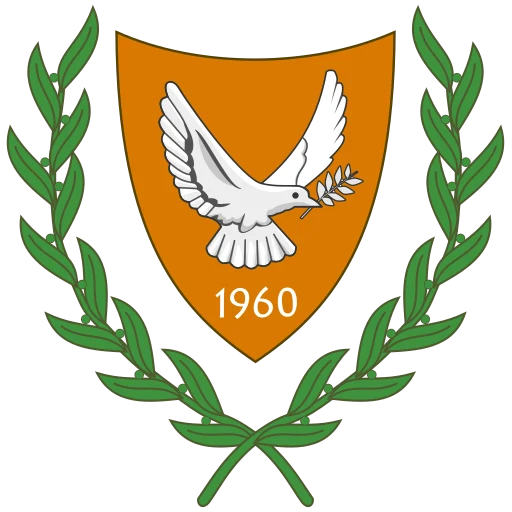
National emblem Play the coat-of-arms quiz →
Cyprus's flag is unusual for depicting the island's own map in copper-yellow above two green olive branches on a white field. The copper colour recalls the island's ancient copper deposits, from which Cyprus takes its name, and the olive branches symbolise peace between its Greek and Turkish communities. White reinforces the message of peace.
Facts about Cyprus
- The capital of Cyprus is Nicosia.
- Cyprus uses the euro (EUR).
- Cyprus has about 1.4 million people (2025).
- Cyprus covers 9,251 km².
- Cyprus became independent from the United Kingdom on 16 August 1960.
- Cyprus' biggest export is ships. Top exports: ships, refined petroleum, medicines, cheese and soft-drink concentrate.
- Official languages of Cyprus: Greek and Turkish.
- Largest religious group in Cyprus: Eastern Orthodox Christian (89.1% of people).
- In Cyprus, people drive on the left.
- Cyprus has 648 km of coastline.
- Cyprus' system of government: Republic of Cyprus - presidential republic; self-declared "Turkish Republic of Northern Cyprus" (TRNC) - parliamentary republic with enhanced presidency.
- Turkey invaded northern Cyprus in 1974 after a Greek-backed coup. The island has been divided ever since, with a UN buffer zone across it.
- Archbishop Makarios III led the Greek Cypriot campaign against British rule and was president from 1960 until his death in 1977.
Sources: World Bank, CIA World Factbook, Wikidata (details).
Is Cyprus bigger than its neighbours? Compare its population and size in Country Clash →
Play the flag quiz → Play the capital quiz →